28 plants worth knowing on sight, 10 of which can kill. What part is toxic, how much it takes,
how fast it moves, and where you would actually run into it. Free, and no account needed.
If your horse has eaten something, call your vet now
Do not wait to identify the plant first, and do not wait for symptoms. With yew, a horse can die within half an
hour. Take a sample or a photograph of the plant if you can do it in the next minute, get the horse away from it
and off the pasture, and ring your veterinarian while you do. This page is for learning your fields before
anything happens. It is not a treatment guide.
Showing 28 of 28, worst first.
Japanese yew
Can kill
Taxus cuspidata
Also called Yew, Taxus
Toxic part
Leaves, and the whole plant
How much matters
About a mouthful. Roughly 0.1% of body weight in leaves can kill a horse.
How fast
Within 30 minutes
What you would see
Often none. Horses usually die before anyone sees a symptom, from respiratory or cardiac collapse.
This is the one that kills fastest, and yew leaves are palatable to horses. It is an extremely common ornamental hedge, so the usual route is a neighbor tossing yard clippings over the fence into a pasture.
Garden or ornamentalIn the hedgerowSource: Rutgers NJAES
Poison hemlock
Can kill
Conium maculatum
Also called Hemlock
Toxic part
All parts. Toxicity rises through the season, especially in the roots.
How much matters
About 4 to 5 pounds is a lethal dose.
What you would see
Nervousness, trembling and incoordination.
Found in moist ground, with a parsnip-like smell when cut. The roots look like parsnips, which is how it gets eaten.
Confused with: Water hemlock, which is far more toxic. Poison hemlock has many small fern-like leaves; water hemlock has large serrated leaves.
Depression, lethargy, faster and deeper breathing, raised heart rate, jaundice, dark brown urine, coma and death. It destroys red blood cells and damages the kidneys.
Fresh leaves on a standing tree are the lesser worry. The danger is wilted leaves, which turn sweeter and more palatable, so a storm-dropped limb in a pasture is the classic case. Fallen leaves stay toxic for about a month.
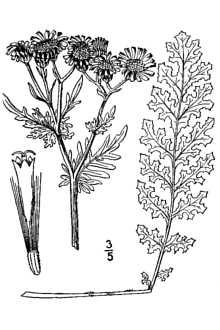
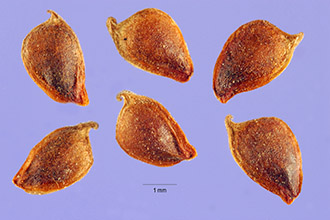
All of it. The first year rosette is the most toxic stage.
How much matters
Eating 5% or more of the daily diet as prebloom tansy ragwort for more than 20 consecutive days can be expected to kill within six months.
How fast
Signs may not appear for six months or more after it is eaten
What you would see
Nothing at all, for a long time. Then lethargy, fluid filling the abdomen, and death within two to four days. Some develop nervous signs: impaired vision and constant stumbling. Pregnancy, lactation or poor nutrition can bring the collapse on.
The cruelest plant on this list. It destroys the liver slowly, and the horse can die months after the contaminated hay is gone and long past any chance of inspecting it, so the death often gets blamed on something else. It stays toxic when baled, and horses grazing an infested pasture cannot avoid eating it along with good forage.
Violent behavior, muscle tremors and convulsions. It attacks the central nervous system.
The most toxic plant on this list by weight. It grows in wet ground and smells like parsnip when cut. Its toxicity falls through the growing season, but the roots do not.
Confused with: Poison hemlock, which is a different plant. Water hemlock has large serrated leaves; poison hemlock has many small fern-like leaves.
Also called Black cherry, Bitter cherry, Chokecherry
Toxic part
Seeds, foliage and bark, which produce hydrogen cyanide
How much matters
Two and a half pounds of black cherry leaves would be toxic to a 1,000 pound horse.
What you would see
Cyanide poisoning. The whole Prunus genus, including pears and peaches, is toxic.
Wilted leaves are the most dangerous: cyanide concentration rises and the leaves sweeten as they wilt. Drought stress raises it too. The small suckers growing from the base of a cherry tree, even from a cut stump, carry high levels.
Chewing disease, properly nigropallidal encephalomalacia. Brain lesions and mouth ulcers leave the horse unable to eat or drink properly.
Horses are the only animal known to be affected this way. There is no treatment, and affected horses usually die of starvation or dehydration. It infests millions of acres in California, so this is a western pasture problem above all.
Also called Horse nettle, Black nightshade, Bittersweet nightshade
Toxic part
Leaves, shoots and unripe green berries. Green berries are the most toxic, then red or black berries, then leaves, stems and roots.
How much matters
One to ten pounds of plant material is estimated to be fatal.
What you would see
Dilated pupils, diarrhea, loss of appetite, loss of coordination, sudden depression, apparent hallucinations and convulsions.
The family includes tomatoes and potatoes. Horses generally leave it alone unless they are very hungry and there is nothing else to eat, which is the real lesson: overgrazed pasture is what makes these plants dangerous.
Short term, photosensitization: reddening of skin exposed to sunlight, especially under white markings, then dry necrosis, swelling, discharge and crusted inflamed areas. Long term, big liver syndrome and acute liver failure, which can be fatal.
It has been included in some pasture seed mixes, so it can arrive in a field deliberately. Fifteen to thirty inches tall with a small pink flower about half an inch across on the ends of secondary branches.
Confused with: Red and white clover, which are not toxic. Those have a larger flower, hairy stems and leaves, and a white inverted V mark on the leaf.
Depression, lethargy, laminitis, swelling of the lower limbs, and a rise in temperature, pulse, respiration, gut sounds, digital pulse and hoof temperature.
Horses are poisoned mainly through dark black walnut shavings mixed into ordinary pine bedding, not by grazing. Signs usually fade within hours of getting the horse off the shavings, but the laminitis can go on causing trouble.
Confused with: Dark walnut shavings scattered through pale pine shavings, which is what to look for in a delivery.
Listed by Rutgers among the toxic weeds found in horse pastures. Bracken retains its toxicity when dried into hay, which is what makes it different from buttercup.
About half of horses that eat it show signs: swelling and fluid in the lower legs, a fever of 103F or higher, warm hooves, a pronounced digital pulse, stiff joints, unwillingness to move, and a camped out stance. Death is rare.
Called the most common poisonous plant to horses in Minnesota, and most poisoning happens through infested hay rather than grazing. Signs usually clear two to four days after the weed is taken away, though a foundered horse takes longer and may be off full work for months. Do not transport a horse with laminitis during the acute phase.
Also called Thorn apple, Devil's trumpet, Jamestown weed, Stink weed
Toxic part
All parts, from tropane alkaloids
What you would see
Weak rapid pulse, dilated pupils, dry mouth, incoordination, diarrhea, convulsions, coma, and sometimes death.
Grows up to five feet in overgrazed pasture, with white or purple trumpet flowers and prickly seed capsules. It smells and tastes foul, so horses rarely eat it when they have decent forage.
This is a broodmare problem rather than a general one, and it is the reason mares are moved off fescue pasture in late pregnancy. The grass itself is a common, deliberately planted forage.
Increased salivation, reduced appetite, colic and diarrhea. Severe cases can lead to convulsions and death.
Buttercup loses its toxicity when dried for hay, so a buttercup-heavy field can still make safe hay. It is unpalatable and irritates the mouth, so a horse with adequate grazing is unlikely to eat it. It thrives in overgrazed pasture.
Roots are the most toxic part, but leaves and stems can also poison
What you would see
A burning sensation in the mouth, low grade chronic colic and diarrhea, from phytolaccotoxin.
Grows up to ten feet with a distinctive purple or red stem and clusters of berries that ripen from green to dark purple. Not very palatable, so horses with good forage tend to avoid it.
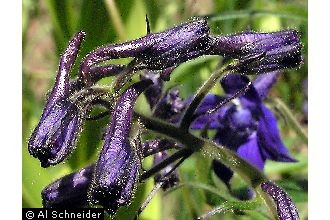
Nervousness, weakness and a staggering gait with sudden falls, salivation, muscle twitching, bloat and a rapid irregular pulse. Excitement and exercise make every sign worse.
Listed here for accuracy rather than alarm: larkspur is a serious killer of cattle, but the federal poisonous plant lab says losses rarely occur in horses. The exception is a horse worked hard straight after eating a large amount. Most toxic in early growth, though the flowers and pods can climb again late in the season.
Confused with: Wild geranium is often mistaken for it, but has shallow leaf lobes where larkspur has deep ones. Monkshood has a similar blue flower with a hood; larkspur has a hollow stem.
Almost every plant here is unpalatable, and a horse with enough decent grazing or hay walks past it. Overgrazed pasture is the single biggest risk factor on this page. Fixing the grazing does more than pulling weeds.
Wilted is worse than fresh
Red maple and wild cherry both get more dangerous as they wilt, because the toxin concentrates and the leaves sweeten. A storm-dropped branch left in a field is more of a hazard than the living tree above it.
The fence line is the danger
Yew, oleander and rhododendron rarely grow in a pasture. They arrive as garden clippings tossed over the fence by a well-meaning neighbor. It is worth one conversation with whoever lives next door.
It is not only the pasture
Black walnut poisons horses through bedding, not grazing. Sweet clover becomes dangerous only after it molds in storage. Milkweed and bracken keep their toxicity when baled. Check what arrives on the truck as well as what grows in the field.
Where this comes from.
Toxicity, doses and signs come from the Rutgers New Jersey Agricultural Experiment Station fact sheet on poisonous
weeds in horse pastures, and the Cornell University Department of Animal Science poisonous plants database. Every
figure on a card is stated by a source linked on that card, and where a source gives no dose or timing, the card
leaves it out rather than borrowing a number from a similar plant. Photographs are from the USDA PLANTS Database,
which is United States government work and carries no copyright. This list is not exhaustive: it covers the plants
that most often harm horses, not every plant that can.
Educational reference only.
Plant identification from a photograph is genuinely hard, and several plants here have close relatives that are
harmless. If you are not certain what is growing in your field, ask your veterinarian or your county extension
agent to look at it. Nothing here is veterinary advice or a treatment plan.
Know your fields before you need to
EquiDetails keeps each horse's health history, so if something does go wrong your vet can see what the horse has
been through instead of starting from scratch.